The Technical Architecture of a Professional Drone Light Show
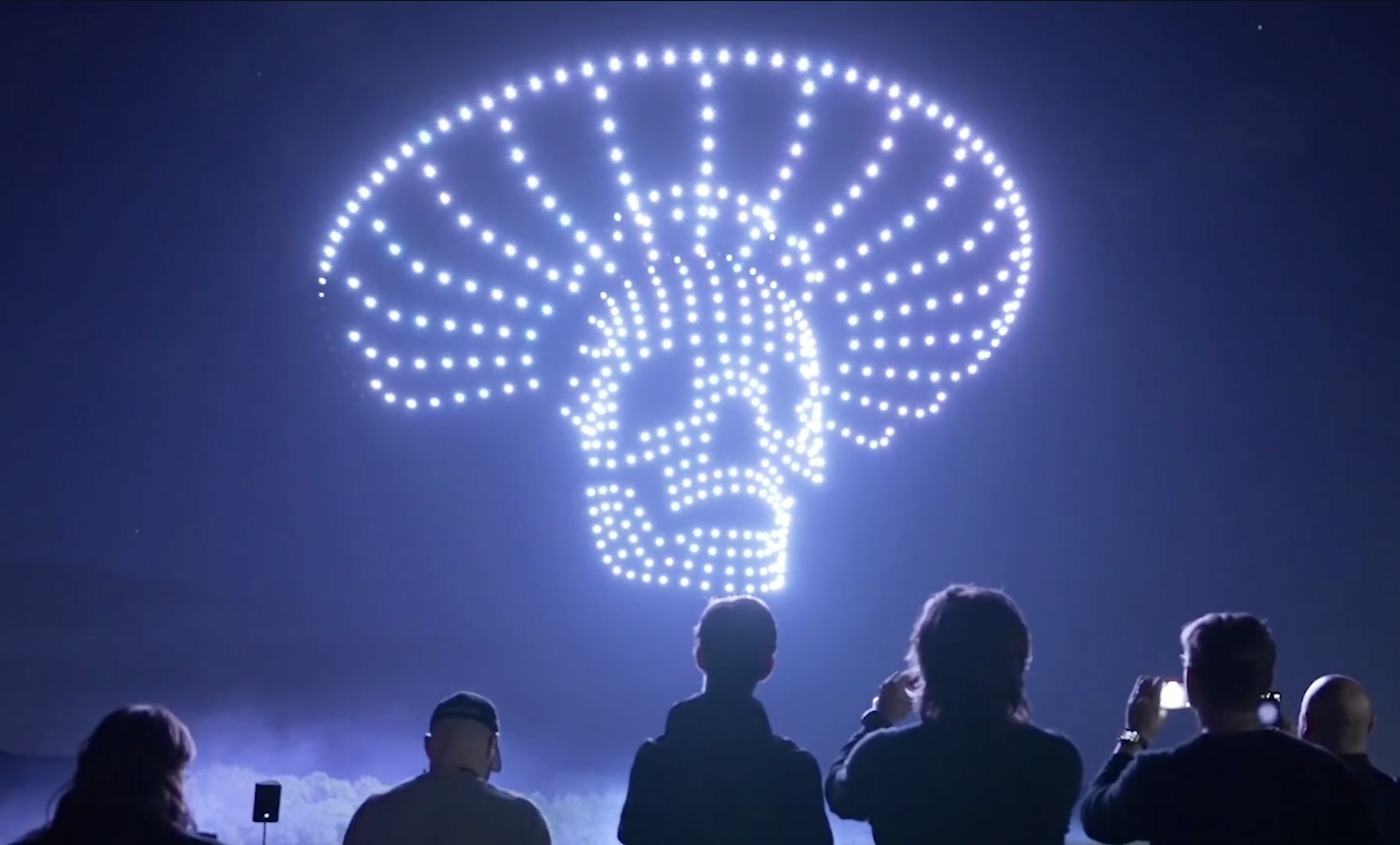
Thousands of people have stood in a field with their necks turned towards the sky, watching tiny dots of light paint dynamic pictures, wondering ‘how do they do that’ and what a drone show is like behind the scenes. The formations seen in the air rests entirely on the moving parts down on the ground, as well as careful planning and execution long before the show ever begins.
At its core, a drone show is a coordinated fleet of GPS-guided aircraft. Each one carries an LED array and flies preprogrammed paths to paint images, animations, text, or logos across the night sky. Picture a few hundred to a few thousand flying pixels. Professionals have spent years making that look effortless, and that’s the hard part. Underneath the spectacle lies a stack of engineering layers that cooperate in real time, from the hardware inside each drone to the ground station that runs them all at once.
The Hardware Layer
The starting point is a single drone, and the entire show builds from there. Each drone carries an LED array bright enough to read from over 3 miles away, a GPS module that knows where it sits in three-dimensional space, a battery sized for the flight time, and motors that hold position against a gusty breeze. An onboard processor runs the show. It takes its cue, checks its coordinates, and adjusts dozens of times a second.
Our drones are made in the USA, and the show-grade build matters more than people expect. A consumer drone you’d buy for vacation footage might drift a little, but a show drone can’t. The positioning has to land within centimeters, the LEDs need consistent color and brightness across the entire fleet, and every unit has to behave identically to the one next to it. Reliability is the core of a successful drone show.
Now multiply that by a few hundred or a few thousand. Each drone becomes one pixel on a canvas the size of the sky, & they all move in perfect synchronization.
Turning a Vision Into a Flight Path
The magic happens when designers turn a rough concept into a path that a drone can follow. Our designers build the show in 3D animation software, sketching shapes, logos, text, and themed visuals as an animator would block out a scene. A client might hand us a brand mark and a song. We hand back a sky full of motion.
The translation step is the clever bit. Software takes that animation and breaks it down into discrete coordinates. The software directs where each drone needs to be, frame by frame, throughout the show. A thousand-drone formation means a thousand position points at any given moment in time, and those points update many times in a single second. The animation you imagined becomes a giant table of executable data that the fleet can read.
The drones are then choreographed to music. Every climb, color shift, and formation change gets timed to the beat, so a chorus hits as a logo bursts open or a drum fill scatters the drones across the sky. Drone shows may look like cold math on paper, but the execution can be both awe-inspiring and heart-warming.
Ground Control and Communication
Walk behind the launch site during a show, and you’ll find the real command center. The ground control station is a hardened case of equipment that holds the entire flight plan and sends it skyward. This is the nervous system that connects the design we built to the drones on the horizon.
Plain GPS gets you within a few meters, which works fine for your phone’s map app and falls apart for a show. We use RTK, a differential GPS setup that corrects the signal against a fixed ground reference. That correction tightens accuracy down to a couple of centimeters. This allows drones to fly close together without bumping, and the formations to stay crisp.
Every drone reports back: position, battery level, heading, status. All of it streams to the operator in real time. A pilot watches that telemetry through the whole flight, ready to act the second a number drifts out of range.
Engineering for Trust
Safety is what lets us turn all this hardware into a magical moment, so we build it into every layer. Licensed pilots run the show, the same way a licensed crew handles any serious aviation project. They train for the routine flights and the bad days alike.
Geofencing draws an invisible box around the flight zone, and the drones stay inside it. If a unit ever tries to wander past that boundary, the system catches it. Redundant fail-safes are in place to back up critical functions, so a single hiccup doesn’t cascade into a problem. A drone that loses signal or runs low on battery knows how to land itself in a controlled way.
The weather is a determining factor and is monitored throughout the process. Our drones operate in winds up to 25 MPH, and we evaluate conditions in real time before and during the show. If the wind exceeds the limit, the call must change. That discipline is the underlying reason a show looks so fluid to a spectator.
Bring Your Vision to the Pyrotecnico Crew
All this technology means nothing without the people running it. The drones, the software, the ground station: they’re tools, and tools need a skilled crew to make them sing. The team reads the site, reads the weather, reads the room, and makes a hundred small calls that never show up in the flight plan. That judgment comes from years of experience doing the work.
Pyrotecnico is here to simplify what goes into a professional drone show. We handle the whole arc as a single point of contact, from permitting and planning through execution and cleanup. You bring the vision. We take care of the details that keep you up at night.
We also love a challenge, so send us the wild ideas and the asks that other people call impossible. A logo nobody thinks can fly. A finale that sounds too ambitious on paper. Get in touch with us today, and let’s build something people talk about for years.
Key Takeaways
- A drone show is a coordinated fleet of GPS-guided aircraft, each carrying an LED array, flying preprogrammed paths to create images, text, and logos across the sky.
- Show-grade drones need centimeter-level precision, consistent brightness, and fleet-wide reliability that consumer models can’t match. Pyrotecnico’s are made in the USA.
- Designers build shows in 3D animation software, then translate the visuals into exact coordinates that tell every drone where to be, frame by frame.
- Shows are choreographed to music, with each climb, color shift, and formation timed to the beat.
- Real-time telemetry lets a licensed pilot track each drone’s position, battery, and status throughout the flight.
- Safety runs through every layer: licensed pilots, geofencing, redundant fail-safes, and weather monitoring (drones fly in winds up to 25 MPH).
- The tech only works with a skilled crew. Pyrotecnico handles permitting, planning, execution & cleanup as a single point of contact.